- Beyond Borders: Law & Diplomacy
- Posts
- News from the world of international law and diplomacy.
News from the world of international law and diplomacy.
Discover Global Shifts: Climate Change and the Call to Act for Humanity

Peter Jarábek
August 27, 2025
Beyond Borders: Law & Diplomacy
WELCOME BACKWhat happened during the summer? Summer is usually a quieter season in international organizations. Many diplomats and officials take their annual leave, and agendas tend to lighten as high-level meetings slow down. It is also a period of transition: a time when many diplomats end their term and new ones arrive, reshaping networks and working dynamics. Yet, even in this traditionally inactive period, important developments still unfold. Working groups continue drafting agreements, technical experts advance reports, and crises rarely wait for the diplomatic calendar. In many ways, summer serves both as a break and as a moment of preparation, laying the groundwork for the busier autumn months when international diplomacy returns at full speed. | 
This edition arrives at a moment when the intersection of law, humanity, and global responsibility is at the forefront. From a landmark advisory opinion that frames climate change as a matter of international justice to the global recognition of World Humanitarian Day, the themes of accountability, resilience, and solidarity are impossible to ignore. As always, Beyond Borders is here to trace these developments, not just as headlines, but as part of the evolving landscape of international law and diplomacy. |
ICJ NEWS: LANDMARK CLIMATE CHANGE ADVISORY OPINION RELEASED
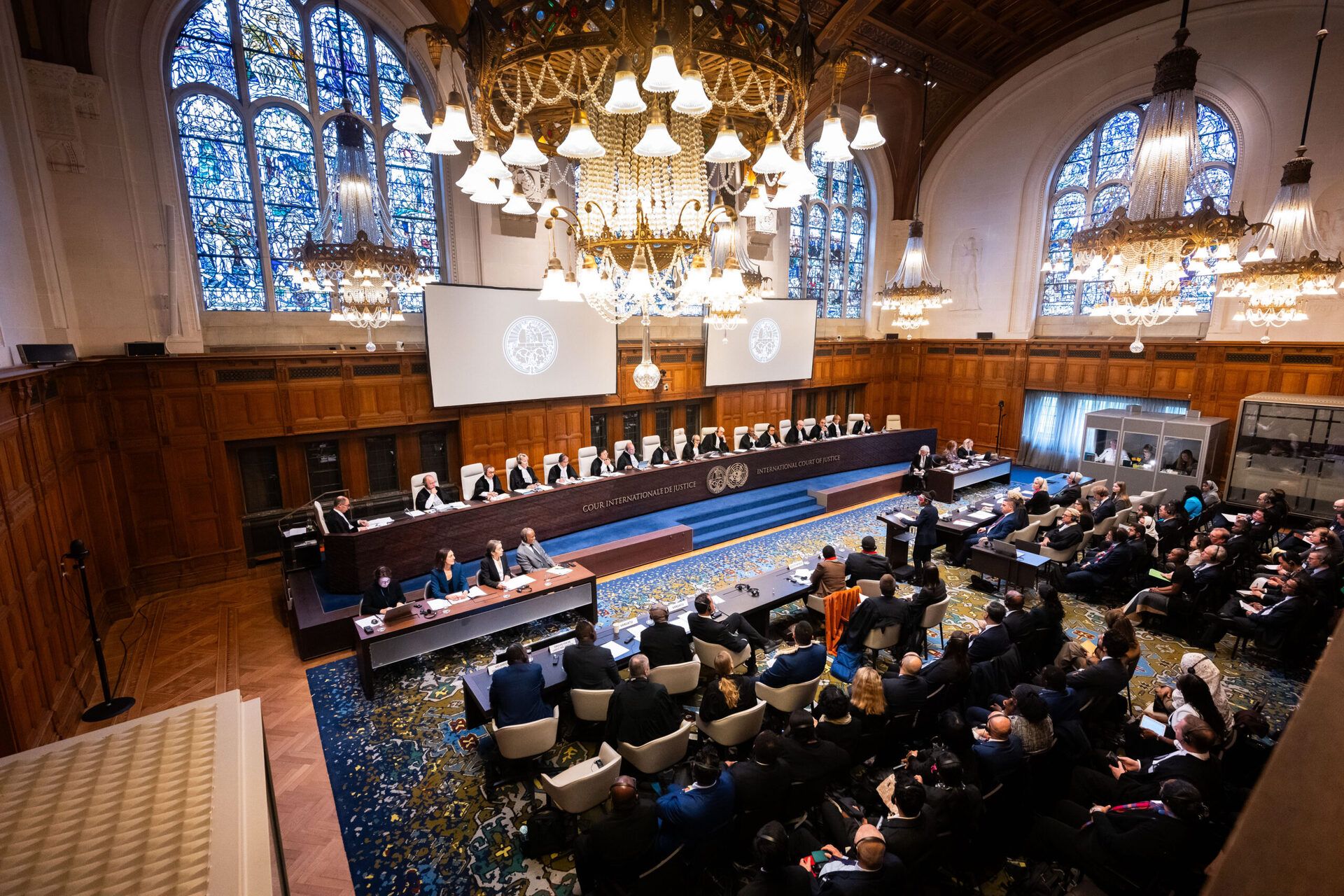
The iconic Peace Palace in The Hague, a symbol of international law and justice
THE HAGUE — On 23 July 2025, the International Court of Justice issued its long-awaited advisory opinion on climate change. Let’s take a look at the main points and some of its key findings.
The ICJ's climate change case summary indicates that states have legally binding obligations under both treaties and customary international law to prevent and mitigate climate change, including limiting global warming to 1.5°C and cutting emissions. Failing to do so is an internationally wrongful act, requiring states to cease the harmful conduct and provide reparation for loss and damage. The Court affirmed the existence of a legal duty for all states, not just those party to climate treaties, to protect the global climate system through due diligence, applying to actions like fossil fuel production, consumption, and subsidies.
Key Findings of the ICJ's Advisory Opinion
Legal Obligation to Limit Warming:
The Court ruled that states have a binding legal obligation to restrict global warming to 1.5°C, a goal that demands ambitious mitigation efforts.
Binding Duties Under International Law:
States have binding duties to act to prevent and mitigate climate change, derived from both international treaties (like the Paris Agreement) and customary international law.
Duty to Prevent Harm:
States carry a fundamental obligation to prevent serious environmental harm, including harm to the climate system, an obligation that applies universally to all states.
Due Diligence Standard:
States must exercise due diligence to assess and prevent harm from climate change, a flexible obligation shaped by legal and scientific considerations.
Fossil Fuel Conduct is Key:
The failure to regulate greenhouse gas emissions, including fossil fuel production, consumption, licensing, and subsidies, constitutes an internationally wrongful act.
Consequences of Wrongful Acts:
States that fail to meet their climate obligations commit an "internationally wrongful act" and must cease the harmful conduct, offer guarantees of non-repetition, and provide full reparation (including compensation) to injured states.
Broader Application of Law:
The Court rejected arguments that only climate treaties apply, holding that broader sources of international law impose duties on states.
Existential Threat:
The ICJ President recognized climate change as an "existential threat" that imperils life on the planet.
For me, one of the most interesting aspects was the concept of erga omnes obligations. ICJ confirmed that climate obligations are collective in nature, owed to the entire international community (“erga omnes”). This means not only that all states share an interest in protecting the climate system, but also that they carry concrete duties stemming from these obligations.
Judge Tladi, however, raised a sharp critique. He argued that the Court repeated a methodological mistake from the Israel advisory opinion by equating erga omnes with jus cogens. If applied consistently, this logic would mean that breaches of climate obligations automatically trigger duties of non-recognition, non-assistance, and cooperation – a consequence the Court sidestepped.
By analogy with other ICJ opinion, such duties may include: (i) a duty not to recognize as lawful situations created by serious breaches of climate obligations, (ii) a duty not to assist in maintaining such situations – for example by supporting activities that lock in unlawful levels of emissions – and (iii) a duty to cooperate, especially through the UN system, to bring such breaches to an end (analogy from Israel advisory opinion).
Tladi warned that such conflation opens a “Pandora’s box” of contradictions. In his words, the ICJ instead chose to ignore the inconsistency, acting in the spirit of Hakuna Matata – as if the problem did not exist.
FLASH NEWS
 Growing evidence of the Russian use of sexual tortureUN experts have submitted evidence of sexual torture against 10 Ukrainian civilians in occupied territories. Victims, including four women and six men, allegedly endured rape, electric shocks to genitals, beatings, and mock executions. Special Rapporteur Alice Jill Edwards said these cases reflect a broader pattern of systematic, sexualised torture aimed at instilling fear. Experts also cited arbitrary arrests, disappearances, and deaths in detention, urging accountability and the release of one woman still held in Russia. |  What happened between Cambodia and Thailand?A century-old border dispute over the Preah Vihear temple reignited in mid-2025, escalating from a brief May skirmish into open conflict by late July. Rooted in colonial-era treaties and unresolved ICJ rulings, nationalist tensions fueled rocket attacks, Thai airstrikes, and heavy casualties. More than 50 people were killed and 200,000 displaced before a ceasefire was brokered on 28 July in Malaysia. The crisis highlights how unresolved historical grievances can still destabilize regional peace. |
 Armenia-Azerbaijan peace deal: Has the US ended decades of conflict?The joint peace declaration signed at the White House on August 8 by the Armenian Prime Minister and the Azerbaijani President is an important step toward stability and prosperity in the region, although it does not represent a final peace agreement. The declaration outlines commitments to open transport and energy links through Armenia’s Syunik region and to build lasting interstate relations. US involvement played a central role in securing the deal, and continued engagement will be crucial for its ratification, implementation, and resilience against regional pressures. |  Elephant in the room: Alaska and Washington talksThe Alaska summit between Trump and Putin, as well as the Washington meetings with Zelenskyy and European leaders, avoided a sell-out of Ukraine’s interests but brought no major progress. The US shifted by rejecting a ceasefire and backing talks on a comprehensive peace deal, while Russia demanded Ukrainian withdrawal from Donetsk but signaled openness to non-NATO security guarantees. In Washington, Zelenskyy and European leaders stood firm: ceasefire first, sanctions maintained, and no troop withdrawal. Territorial issues were postponed, with Switzerland ready to host the next round. The US now acts as mediator, but key disagreements risk stalling the fragile talks. | 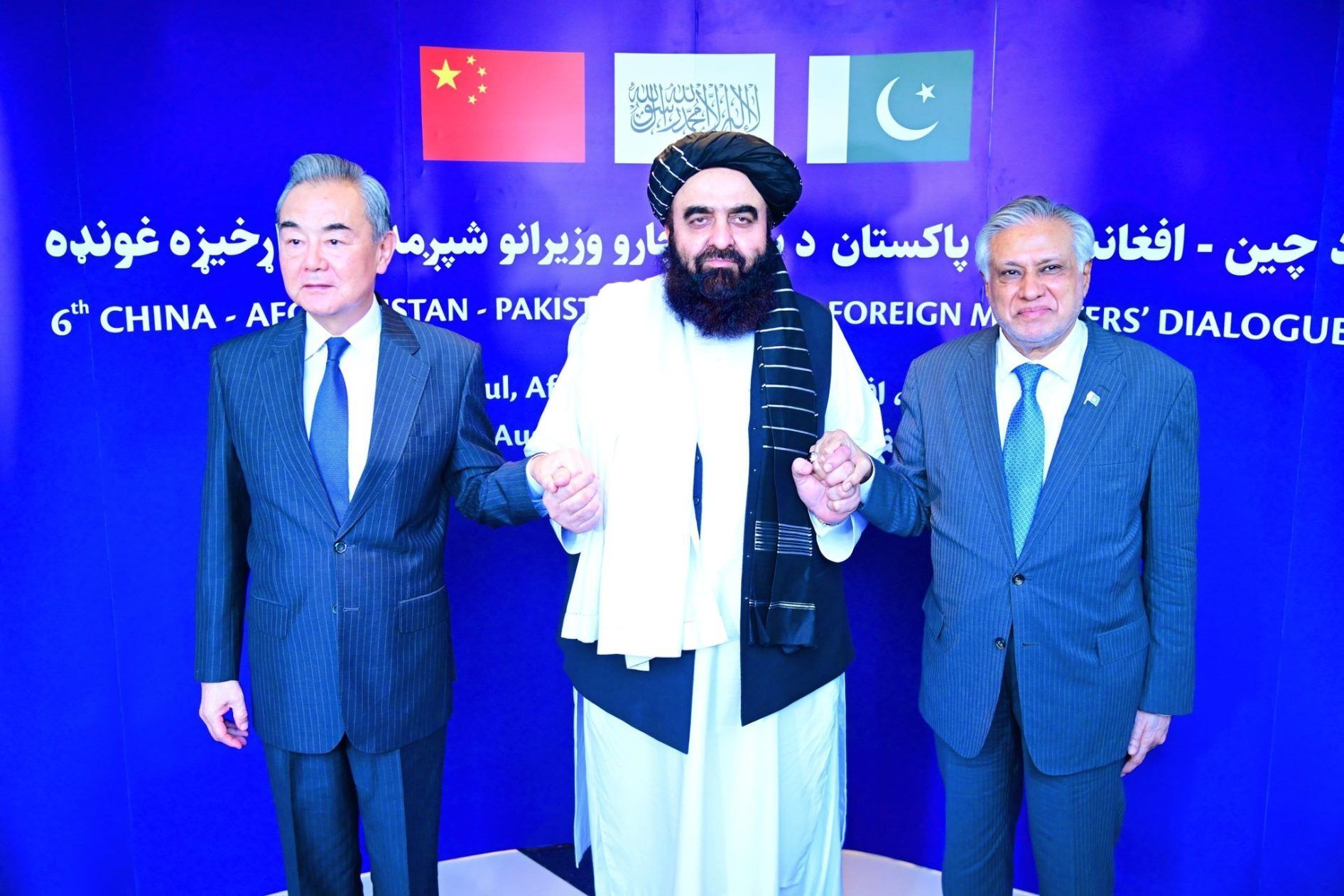 China-Taliban-Pakistan dialogue: Is China taking a gamble?On 20 August, Kabul hosted the first trilateral dialogue since the Taliban’s return. China pushed to extend the China-Pakistan Economic Corridor into Afghanistan, betting prosperity could curb militancy. Pakistan, facing deadly cross-border attacks, demanded concrete Taliban action against the Tehreek-e-Taliban Pakistan and the Balochistan Liberation Army. The Taliban, meanwhile, welcomed Chinese investment but continues tolerating militant sanctuaries while raising doubts over Beijing’s gamble. |
WORLD HUMANITARIAN DAY - 19th of August

To stand with those who step into crisis is to stand for humanity itself. Their courage demands not silence, but action.
ORIGINS AND PURPOSE — World Humanitarian Day is observed every year on 19 August, in memory of the 2003 bombing of the UN headquarters in Baghdad, which killed 22 humanitarian workers, including Sergio Vieira de Mello, the UN Secretary-General’s Representative for Iraq and UN High Commissioner for Human Rights. In 2008, the United Nations General Assembly officially designated this date as World Humanitarian Day. Since then, this day has served to honour aid workers, raise awareness of humanitarian needs, and advocate for the protection and dignity of civilians affected by crises. The campaign is coordinated annually by the UN Office for the Coordination of Humanitarian Affairs (OCHA).
THIS YEAR — This year’s message is urgent: the humanitarian system is under unprecedented strain—underfunded, overwhelmed, and increasingly under attack. In 2024 alone, over 380 humanitarian workers were killed, with many more injured, detained, or kidnapped. Alarmingly, those responsible for attacks on aid workers are rarely held to account, in defiance of international humanitarian law.
AID UNDER FIRE AND A SYSTEM UNDER STRAIN — As of 14 August 2025, 265 aid workers have already been killed. In 2024, Gaza accounted for 181 deaths, followed by 60 in Sudan. In total, violence against humanitarians increased in 21 countries, with State actors often cited as the main perpetrators. According to OCHA, most of the aid workers killed were national staff, often targeted in their own communities.
In a powerful message from Deir Al-Balah in central Gaza, Olga Cherevko (OCHA) described the persistence of exhausted aid teams:
“Everyone’s still showing up, but courage alone isn’t going to feed people. What we need, again, is a permanent ceasefire and political solutions to this crisis.”
UN Secretary-General António Guterres emphasized that aid workers are the last lifeline for over 300 million people, yet they face increasing violence and decreasing protection.
“Red lines are being crossed with impunity. What is missing is political will and moral courage. Humanitarians must be respected and protected. They can never be targeted.”
A FUNDING CRISIS WITH GENDERED IMPACT — As of 12 August, only 18% of the Global Humanitarian Overview’s requirements have been funded. Women-led organizations have been hit particularly hard. A 2025 UN Women survey across 44 crisis settings found: 72% of women-led groups have laid off staff. Over 50% have had to suspend programmes. This massive reduction in capacity undermines protection services, increases exposure to gender-based violence, and leaves women burdened with more unpaid care work and fewer social safety nets.
This massive reduction in capacity undermines protection services, increases exposure to gender-based violence, and leaves women burdened with more unpaid care work and fewer social safety nets.
WHAT MUST BE DONE — This year’s campaign issues a direct call to leaders worldwide to #ActForHumanity:
Protect humanitarian workers, especially women and local responders, and the civilians they serve
Fund the humanitarian lifeline, ensuring resources reach those on the frontlines, especially local and women-led organizations
Ensure the full and equal participation of women in humanitarian decision-making processes

Peter’s Selected Picks
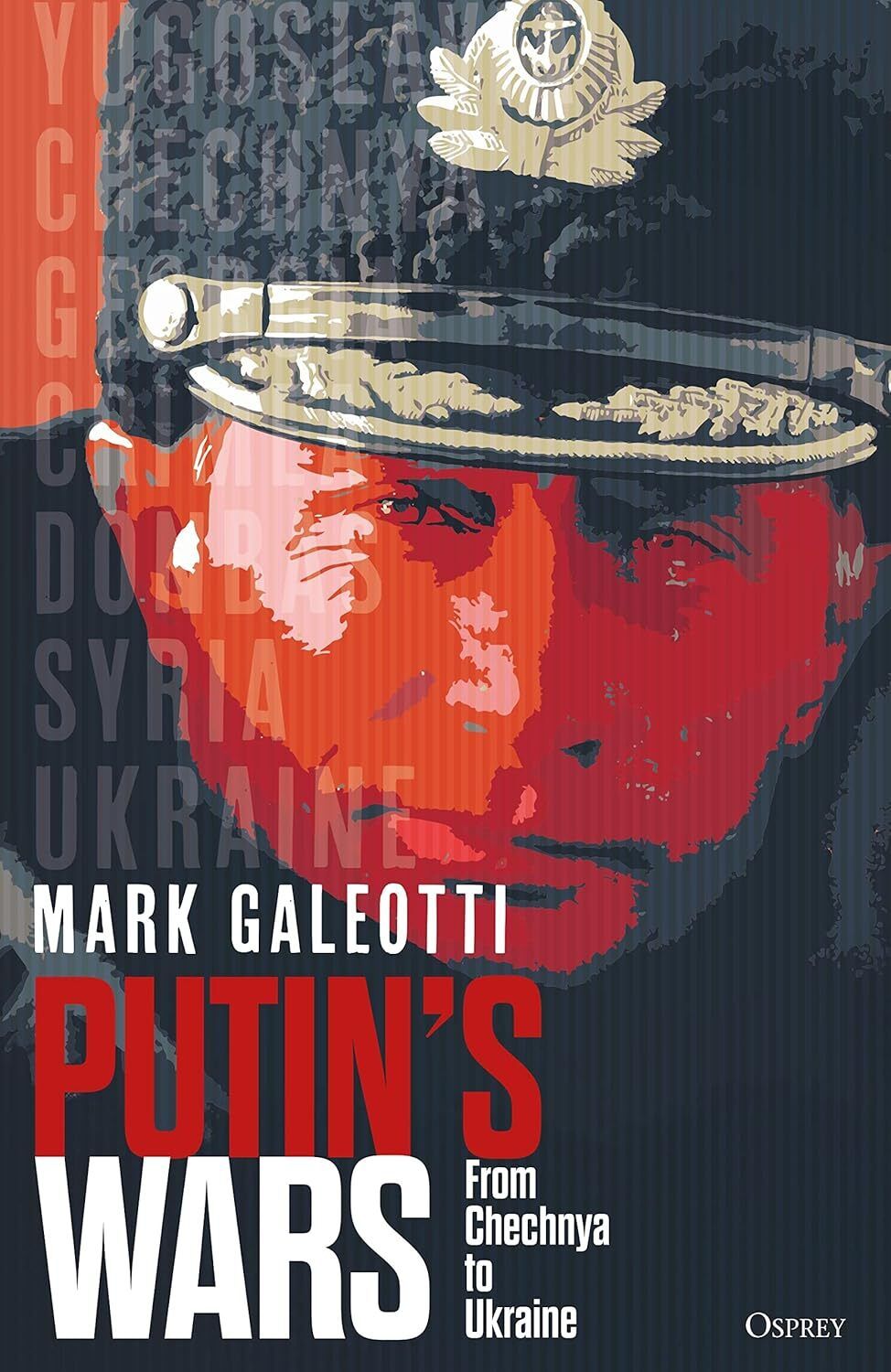 A compelling view of Russia’s military engagements under Putin. Beyond chronicling these conflicts, it explores how Putin rebuilt Russia’s military power, employing mercenaries, covert operatives, and information warfare against the West. Enriched with anecdotes and first-hand accounts from Russian officers, Galeotti provides both strategic insight and a human perspective. With Russia at the center of global attention, this book is an essential guide to understanding over two decades of Moscow’s wars and ambitions. |  A gripping portrayal of power, corruption, and complicity through the eyes of a young Scottish doctor who becomes Idi Amin’s personal physician. The film exposes the intoxicating lure of authority, the moral compromises of survival, and the devastating human toll of dictatorship. It is an unflinching look at how charisma and brutality intertwine, forcing reflection on loyalty, conscience, and the dangers of silence in the face of tyranny. |  A clear and practical exploration of the right to protest as a fundamental human right. By the end of the course, you will understand how international law protects this freedom, recognize the global challenges it faces, and assess the risks posed by restrictive state practices. You will gain the tools to demand rights-respecting policing, develop strategies to stay safe during demonstrations, and take meaningful action to defend the freedom to protest worldwide. |
A Final Note
In a world where conflicts, humanitarian crises, and global power shifts increasingly intersect, the ability to understand and engage with international affairs has never been more vital. Young professionals are not just observers but emerging contributors to the debates and decisions that will shape the decades ahead. Through knowledge, dialogue, and principled action, you hold the potential to strengthen justice, peace, and cooperation across borders.
Thank you for reading this edition. I trust it has offered both perspective and inspiration as you continue to develop your path in the field of international law and diplomacy.
Until next time,
Peter Jarábek
“Law shapes nations. Diplomacy connects them.”